- 1. Why Isolated Blog Posts Fail in Modern Search
- 2. Step-by-Step Blueprint for Designing a Topic Cluster
- 3. Contextual Internal Linking Rules That Improve UX
- Practical Comparison & Decision Matrix
- 4. Illustrative Case Study: Consolidating 14 Thin Posts into One Cluster
- Frequently Asked Questions (FAQ)
- Official Reference Material
- Continue Reading Related Guides
- Operational Execution & Risk Management
Modern search engines evaluate topical authority at the domain and directory level rather than judging isolated blog posts in a vacuum. Building structured topic clusters allows independent publishers to compete against larger media sites without relying on risky link-building schemes.
1. Why Isolated Blog Posts Fail in Modern Search
When a website publishes unrelated articles targeting random keywords, search crawlers struggle to determine which subjects the site genuinely covers with depth. Even well-written articles can stagnate on page two or three when they sit orphaned without contextual reinforcement.
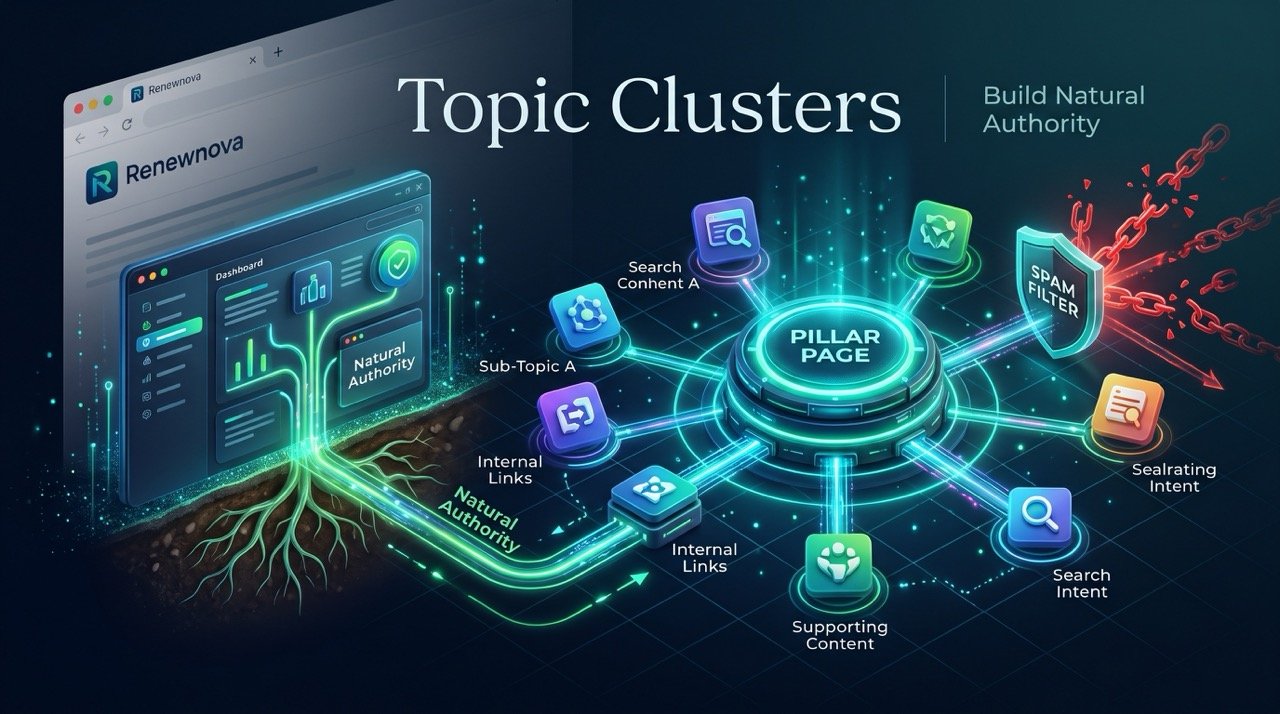
A topic cluster solves this structural weakness by organizing content around one comprehensive pillar page (covering a broad core subject) supported by four to eight narrow cluster articles (each answering one specific operational question in full detail).
- Clear Information Architecture: Visitors and search bots discover every subtopic within two clicks from the main guide.
- Reduced Keyword Cannibalization: Each URL owns a distinct search intent instead of competing against similar pages on your own domain.
- Higher Session Duration: Readers naturally follow logical next-step links, increasing pages per session and engagement signals.
2. Step-by-Step Blueprint for Designing a Topic Cluster
Start by auditing your existing library and grouping posts by the real-world problem they solve. Do not group articles merely because they share a single noun; group them by the user journey from beginner setup to troubleshooting and optimization.
For example, if your pillar guide addresses Freelance Pricing Strategy, your supporting cluster pages should individually cover calculating non-billable administrative overhead, drafting scope-creep clauses, structuring monthly retainers, and raising rates for existing clients.
- Step 1 — Define the Pillar Scope: Write a 1,500 to 2,500-word reference overview that introduces every major sub-decision without getting bogged down in edge cases.
- Step 2 — Map 5 to 6 Supporting Spokes: Assign each sub-decision its own dedicated tutorial with worked examples and checklists.
- Step 3 — Enforce Bidirectional Linking: Link from the pillar down to every spoke, and link from each spoke back up to the pillar and sideways to the immediate next logical step.
3. Contextual Internal Linking Rules That Improve UX
Internal links should never feel like mechanical SEO insertions. Place links inside explanatory paragraphs precisely where a reader encounters a concept that requires deeper background before taking action.
Avoid repeating identical exact-match anchor text across dozens of pages. Instead, use natural, descriptive phrases that accurately preview what the reader will accomplish after clicking the link.
Practical Comparison & Decision Matrix
| Element | Pillar Page | Cluster Spoke Article | Primary Goal |
|---|---|---|---|
| Target Word Count | 1,500 – 2,500 words | 1,000 – 1,500 words | Comprehensive vs. focused depth |
| Search Intent | Broad informational / overview | Specific how-to / decision query | Zero keyword overlap |
| Internal Links | Links out to all 5–6 spokes | Links back to pillar + 2 sibling spokes | Strong topical graph |
| Update Cycle | Quarterly full audit | Semi-annual accuracy check | Freshness & E-E-A-T |
4. Illustrative Case Study: Consolidating 14 Thin Posts into One Cluster
Consider an independent personal-finance blog that published 14 short 350-word posts about invoice templates, late fees, and hourly billing over two years. Because each page lacked depth and overlapped with the others, total organic traffic remained flat at 420 monthly visits.
By merging overlapping posts into one 1,800-word pillar guide on freelance billing systems and five 1,100-word supporting tutorials—each with clear tables and calculators—the site eliminates thin content, clarifies crawl paths, and builds sustainable search visibility over 90 days.
Frequently Asked Questions (FAQ)
How many supporting articles does a topic cluster need?
Four to six well-researched supporting articles are sufficient to establish clear topical depth. Quality and distinct search intent matter far more than publishing dozens of repetitive pages.
Should every cluster article link to every other article in the group?
No. Link every spoke back to the main pillar page, and link horizontally only to the one or two sibling articles that represent the reader’s most logical next step.
What should I do with old short posts that cover the same keyword?
Combine their best insights into one stronger guide, keep the strongest URL, and set up a 301 redirect from the retired duplicate URLs so search engines consolidate signals cleanly.
How long does it take to see results after reorganizing into clusters?
Search engines typically recrawl and re-evaluate restructured internal links within 3 to 8 weeks, with measurable impression growth appearing over a 60 to 90-day window.
Official Reference Material
- Google Search Central: Creating Helpful, Reliable, People-First Content
- Google Search Central: Make Your Links Crawlable
Continue Reading Related Guides
- Keyword Intent for Affiliate Sites: A Practical Guide
- Use AI for Content Research Without Losing Accuracy
Operational Execution & Risk Management
Putting How to Build Topic Clusters That Rank Without Link-Spam into practice requires balancing speed with financial discipline. Validate customer demand through small, reversible tests and track net profit after platform fees, subscriptions, and taxes.
7-Day Execution Roadmap
- Days 1–2 (Constraint Check): Define your weekly time budget, cash buffer, and primary success metric for the next 30 days.
- Days 3–4 (Minimum Viable Test): Launch a focused pilot with real users or buyers to gather direct behavioral feedback.
- Days 5–7 (Iteration): Keep what produces measurable traction, cut low-leverage tasks, and document your checklist.
Apply one useful step, measure the result, and continue with the most relevant guide.